
We started our day with a tour of the SCI living quarters
and new rehabilitation clinic/vocational training center. It was amazing to see
the progress they’ve made in the past year. The last time we were down, there
was just an empty plot of land. The buildings are clean and beautiful, and
inside they are equipped with a section filled with weights and various
equipment for physical therapy, and the other part contains a flat screen TV,
sewing machines, computers, wii games, & arts and crafts of all sorts. This
is the room where Bay Lavi will be born.
 |
| Rehabilitation Center/Vocational Training Center- Where Bay Lavi is made! |


 |
| Betsy & Madame Zidor |
 |
| Brainstorming ideas together |
At 2pm that afternoon, I was introduced to the group of 5
women who would be our first Bay Lavi artisans. As they entered the room one
after another, I was intrigued by how diverse they were with an age range from 19-53 years old. We had an orientation
where I introduced myself, explained what I do, & my mission in working
with them. Afterwards, we gathered around and each woman introduced herself and
shared her story. With the help of Betsy’s translation, I typed as they spoke.
We talked about the earthquake, of life before and after their injury, & of
their hobbies and passions. My eyes were opened to their resilience, optimism,
& determination.


Ginette is a 53 year old mother of three, and was a businesswoman before the
earthquake hit. She would sell rice, candy, & soda on the road in front of
her house. She was happy when she finally got a refrigerator, as it allowed her
to sell cold drinks. When the earthquake hit, she was sitting in front of her
house with her 1-year old grandson on her lap. When everything began to shake,
her reaction was to hover over him to protect him, and in doing so, the house
fell onto her spine. Her grandson was okay, but she had to be pulled from the
rubble with a rope. There weren’t enough hospitals to house everyone who was
injured. After 8 days, they brought her from Port-Au-Prince to a town a few hours away.
With no feeling from her waist down, she spent 8 days without going to the
bathroom. She was laid on a cot in a soccer stadium that they transformed into
a relief center. Ginette arrived at SBHF for rehabilitation in February and it
is here that she has learned to become more independent. She is very close with her children who are often here visiting her.


Barbienne is 24 years old, born into a family of five children. She was a student before her injury. She said that on the day the earthquake hit, she woke up with an intuitively
bad feeling. She knew something was wrong but didn’t understand why she felt
that way. When the earthquake hit, she was in a small space with 2 other
people. She was the only one who survived. She never lost consciousness, and
remembers every detail of the day. Two men had pulled her out and brought her
to the hospital. She was laid onto a bed on the second floor. When aftershocks
were happening, she wasn’t able to run outside. The hospital was shaking and
her bed would sway back and forth. She kept thinking to herself, "this is it,
this is where I’m going to die". She said she should have died a thousand times,
but she lived through it all. The hardest part for her was accepting her
diagnosis, and realizing that she wouldn’t be going back to her previous life.
She said at first she kept thinking that she didn’t want to live anymore, but
that now she appreciates what she does still have, and her perspective changed,
seeing life as even more beautiful after her accident. She said she spends each day making life as
beautiful as it can be, and everyday she takes chances to have pleasure in her
life and be happy. She often tells the other girls not to concentrate on the
problems they have physically, the things that can’t be changed, but to focus
on their goals and what they still have.
Fabi told us there are so many
obstacles she faces being in a wheelchair in Haiti. That there are people who
don’t understand them at all, people who think they can steal from you because
you can’t defend yourself/chase after them, people that ask her to pay them if
she needs help getting across the road. That Haiti is incredibly inaccessible.
She can no longer go to the cinema or get on public transportation. She dreams
of people understanding handicapped people better and to remove the stigma that
they’re helpless. Her outlook is that its NOT her fault that she can’t get
around, its society’s fault that the roads are crappy and she can’t get to
where she needs to go. Everyone needs help, not just handicapped people and
things should be equal for everyone.
Fabi said her bliss is performance
art. She loves to write, sing, and make people laugh. She said that SBHF is
where she made her friends, where she doesn’t feel alone, where she finds
support. She said doctors weren’t expecting her to live past 6 months, and that
she celebrates each birthday more grateful than the last. Fabi’s favorite color is black because she
said it symbolizes strength.

Gina is 28 years old and the oldest of seven children. She was on her way to becoming a kindergarten teacher and was student-teaching when the earthquake hit. Everything turned black suddenly, & the whole
school collapsed. She doesn’t remember much that happened after that, but when
she finally made it out of the debris, her back hurt terribly and she was
unable to walk. Since her injury, she’s tried to go back to teaching, but other
teachers didn’t trust in her ability to work with little kids. She was so close
to the graduation process, but with her disability, its become too complicated
to go back. She said when she started to understand her diagnosis, she felt
very depressed and stressed. She said that where she lives, its extremely hard
for her. She’s the only person in a wheelchair in her neighborhood and there is
NO accessibility. She suffers humiliation when she has to depend on others to
get around and there are many people who are intimidated and scared to help
her. Gina enjoys studying sign language,
is an activist for human rights, and a community organizer. Gina has a glow to
her and her spirit is so strong despite the hardships she's been through.

Mamaille is 19 years old and comes from a family of eight brothers and sisters. She had a business doing hair before her injury. She
was a really good student, enjoyed going to school, and church. She said she
lived well in Port-Au-Prince and had a nice life. She was cooking in her house
before the accident hit. She ran out when she noticed everything shaking. Her neighbors
house fell on top of her. She was awake through everything
and felt like her body died. She couldn’t move anything other than her head,
her entire body was covered in dust and debris. She kept praying and praying
and felt so helpless. Through the crack of light she had, she saw a block about
to fall on her head. She closed her eyes and just waited for it to fall, and when it hit her head, blood flooded down her face. Two men finally came to save her from beneath the rubble. Instead
of removing the debris off of her, they slid her out from it, and it was in
saving her that her back snapped. They took her and laid her onto the ground
where others were putting dead bodies.
A group of relief workers picked her up and brought her to a hospital, where they laid her on the ground outside in front of it because there wasn’t enough room to bring her inside yet. She spent an entire day on the ground in the beating hot sun with no food or drink, in terrible pain, left to die. Her and the othes that laid there just prayed and prayed, & one by one people around her began to die off. She was the only one who survived. She was eventually shipped off to the Dominican Republic for surgery where she faced brutal conditions and had to have her head shaved. Her family thought she was dead and even had a funeral for her. It wasn’t until months later they knew she was still alive. When she was sent back to Haiti, SBHF met her and brought her here. It was here that she learned how to eat again, how to braid hair again, and take care of herself and regain independence. The hardest part for her was acceptance. When she first arrived here and saw a room of people in wheelchairs, she cried and cried, having to accept she was one of them. It was the reality she couldn’t hide from.
When she is older and ready, she dreams of living a very independent life, taking care of her household and providing for her family. She wants to have her own business and prove to everyone that they're wrong about what she's capable of. Her bliss is making jewelry and braiding hair, both of which she is extremely talented at.
A group of relief workers picked her up and brought her to a hospital, where they laid her on the ground outside in front of it because there wasn’t enough room to bring her inside yet. She spent an entire day on the ground in the beating hot sun with no food or drink, in terrible pain, left to die. Her and the othes that laid there just prayed and prayed, & one by one people around her began to die off. She was the only one who survived. She was eventually shipped off to the Dominican Republic for surgery where she faced brutal conditions and had to have her head shaved. Her family thought she was dead and even had a funeral for her. It wasn’t until months later they knew she was still alive. When she was sent back to Haiti, SBHF met her and brought her here. It was here that she learned how to eat again, how to braid hair again, and take care of herself and regain independence. The hardest part for her was acceptance. When she first arrived here and saw a room of people in wheelchairs, she cried and cried, having to accept she was one of them. It was the reality she couldn’t hide from.
When she is older and ready, she dreams of living a very independent life, taking care of her household and providing for her family. She wants to have her own business and prove to everyone that they're wrong about what she's capable of. Her bliss is making jewelry and braiding hair, both of which she is extremely talented at.

Dieulitha is a 40 year old mother of three children. The morning of the earthquake she was taking care of her kids and getting ready to go to her job as a nurse. When everything started to shake in her house, she hit her head and lost consciousness. When she awoke, she couldn't move. No one understood why she couldn't just get up and walk. As the wife of a beloved pastor, many people in the community went to get her help. A group of Korean doctors sent her to a hospital in Santo Domingo. When she discovered the extent of her injury, she was devastated at the thought of not being able to take care of her kids. SBHF helped her regain confidence in herself. She said that after her time here, she doesn't feel sick anymore. She said she has creative ideas for projects and things she can do from home and feels confident that she can care for her kids. Her hobbies include sewing, making jewelry, and assisting the staff at St. Boniface with nursing prep.
She defines bliss as being stress free by thinking positively and imagining the future, making the choice to be happy, staying away from people who frustrate you, and spending time with friends who understand and support you. Being at St. Boniface helps her to connect with others who are in the same boat, and this has helped her get through many challenges.
Here is our SBHF team that is helping us establish and run our collaborative program:

Anita St. Onge, SBHF's Residence Coordinator

Betsy Sherwood, SBHF's Program Coordinator & Social Worker
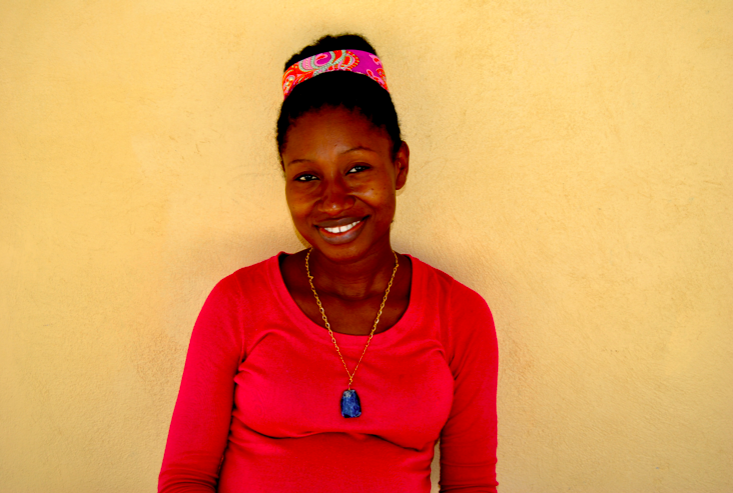
Madame Zidor, SBHF's Psychologist

In the evening, Victoria, Anita & I took a walk through
the town. Everywhere you go, everyone greets you with a friendly smile.
Everyone is welcoming. Bonjou! in the morning, Bonswa! In the afternoon, &
Bon twit at night.
People gather in the streets until the sun goes down. They
sell fried foods cooked on make shift grills, sit and play cards, and the kids
run around together. I imagine the community is much closer because of this.
Most of the houses do not have electricity. When the sun goes down, everyone is
in the dark. Piles of trash are often burned on the sides of the dirt road at
night to make coal. There is so much beautiful untouched nature in the
countryside. There was one stunning tree we came across with delicate red
floral buds, many of which laid scattered beneath it.


